
Change is constant for modern organizations, from more technical-related changes like keeping up with evolving technologies, implementing new software, or continuous process optimization to more traditional business changes like new leadership, launching a new service, or merging with a competitor.
Organizational change often fails because while employees know a change is happening, they don’t understand why it’s occurring. This may be due to a lack of trust, poor change management strategies, or not enabling employees with the proper training and support to navigate the change.
Organizations often implement change management models to overcome change-related issues and navigate transitional periods.
The ADKAR Model is one of the most proven change models among enterprise organizations. Founded by Prosci founder Jeff Hiatt in 1996, it focuses on guiding individuals through the change journey by helping them realize the need for change, equipping them with the skills and knowledge they need to adapt to it, and motivating them to embrace it fully.
This article explores the ADKAR Model, breaks it into its five stages, and provides a detailed roadmap for implementing it to support your next change project.
What Is the ADKAR Model?
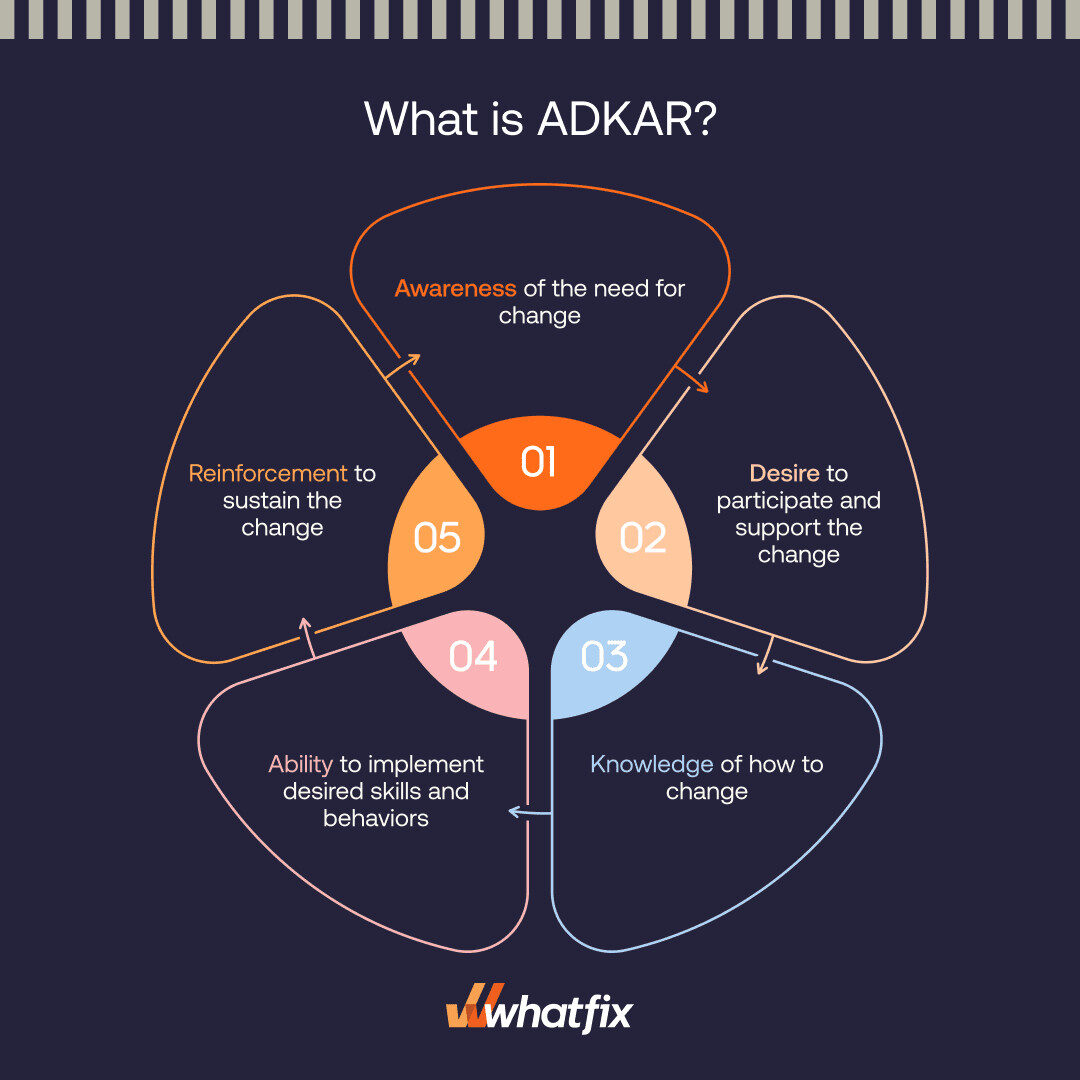
The ADKAR Model is a goal-oriented change management model that focuses on managing change at the individual level. ADKAR stands for Awareness, Desire, Knowledge, Ability, and Reinforcement, representing the five key stages individuals must go through to adopt and sustain change successfully. The ADKAR Model provides a structured approach for organizations to guide employees through the change process, ensuring that they understand the need for change, are motivated to support it, have the necessary knowledge and skills, and can sustain the new behaviors long-term.
The 5 Stages of the ADKAR Model
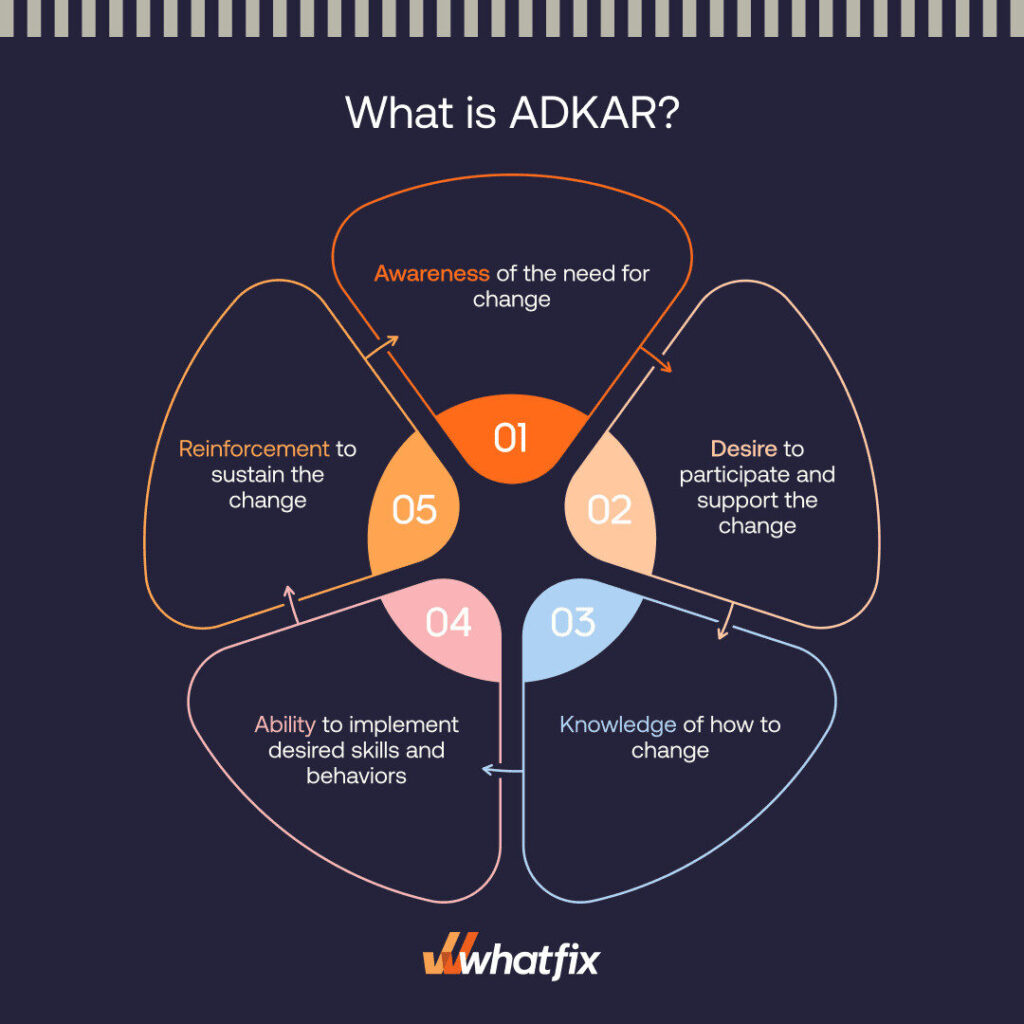
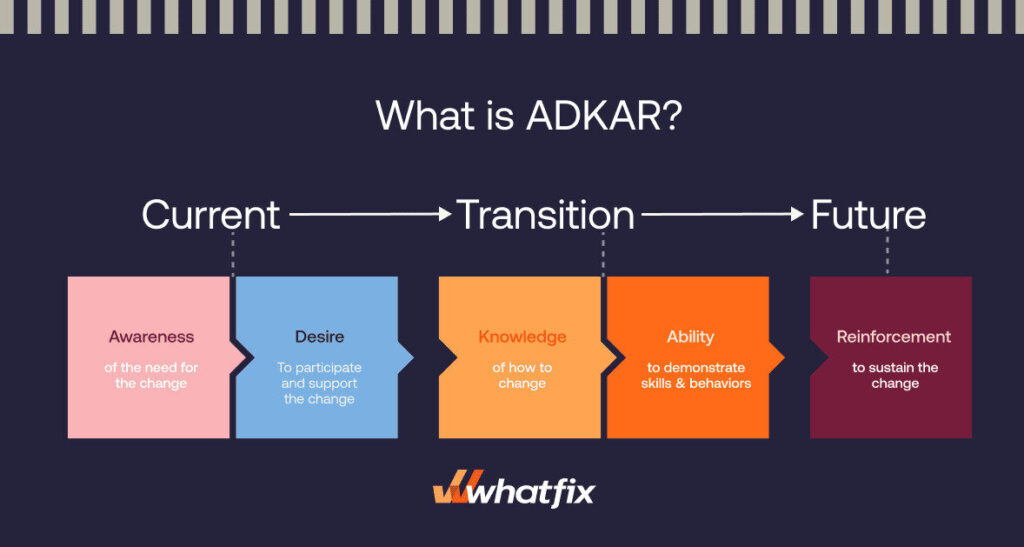
ADKAR stands for Awareness, Desire, Knowledge, Ability, and Reinforment. The Awareness and Desire stages focus on preparing employees for a change (current state), the Knowledge and Ability stages support employees as they adapt to change (transition state), and the Reinforcement stage helps sustain the change (future state.)
Let’s explore all five stages of the ADKAR Model in more detail:
- Awareness: This stage focuses on making individuals understand why the change is necessary. It involves communicating the reasons for the change and the potential risks of not making it. Without awareness, employees may resist the change due to a lack of understanding or fear of the unknown.
- Desire: After building awareness, fostering a personal desire to support and participate in the change is essential. This involves motivating employees to embrace the change by addressing their concerns, demonstrating personal benefits, and securing buy-in. Without desire, even well-informed individuals may remain resistant or disengaged.
- Knowledge: Knowledge refers to providing the information and training necessary for individuals to know how to change. This includes teaching employees the new processes, tools, or behaviors they must adopt. Knowledge is essential to ensure employees are fully prepared to implement the change successfully.
- Ability: While knowledge equips individuals with the “know-how,” ability ensures they can apply it in real-world situations. This stage focuses on building the skills and removing barriers to change that may prevent its successful execution. Practice, support, and feedback are key to developing the required ability.
- Reinforcement: To sustain the change, reinforcement is necessary. This stage ensures employees follow new processes and behaviors after the initial change. It involves recognition, rewards, and continuous monitoring to prevent regression to old habits and ensure the change sticks long-term.
How to Apply the ADKAR Model For Organizational Change
Since the ADKAR Model is outcome-oriented, it facilitates change by setting clear milestones. Every person involved in the change must reach each goal, though different people may have other goals at different times. For example, one person may already desire to change, while another is still becoming aware of the need to change.
One of the most helpful aspects of the ADKAR Model is that its five sequential goals identify potential resistance areas.
For instance, is someone unable to change because they do not understand why it needs to happen (Awareness), or do they not understand how to make the change (Knowledge)? Once you figure out which step someone is stuck on, you will be better prepared to guide them through a stage.
Here are best practices on the goals and steps you must take for each stage of the ADKAR Model. Each step relates directly to one of the ADKAR phases, starting with “awareness”.
GOAL 1: Create awareness of the need to change.
Communicating the need for change is fundamental, which is why awareness is the first stage of the ADKAR Model.
However, creating awareness goes beyond simply announcing a change project. For employees to be truly aware of the necessity for change, they must understand and agree with its reasoning.
Here are a few steps you can take to build an effective change communication strategy for your next change project:
- Communicate early and often: Explain the reasons behind the change. Use multiple channels (emails, presentations, meetings) to ensure everyone gets the message. Transparency is key—explain the business drivers, market conditions, or internal inefficiencies prompting the change.
- Highlight its benefits: Communicate how the change will benefit the organization and the employees. Focus on positive outcomes like improved workflows, better customer experiences, or personal growth opportunities.
- Address fears: Resistance to change often arises from fear of the unknown. Address common concerns, such as potential job changes or increased workloads, and assure employees that support will be available throughout the process.
- Engage key stakeholders: Ensure leaders and managers are aligned with the change and involved in communicating its needs. Employees are more likely to embrace change if their leaders genuinely support it.
GOAL 2: Foster desire to make the change
The second ADKAR stage is desire. Just because employees understand why a change should be made doesn’t mean they want it to occur. Change may mean learning new processes and facing confusion about completing previously known tasks.
Here are a few steps you can take to help build excitement for your change:
- Connect to personal interests: Explain how the change will benefit employees personally. This could include career growth opportunities, better tools for daily tasks, or a healthier work-life balance. When employees see what’s in it, they are more likely to buy into the change.
- Involve employees early: Engage employees early in the change process by seeking their input and feedback. Allowing them a voice in implementing the change creates a sense of ownership and reduces resistance.
- Identify change champions: Appoint influential employees or managers as change agents who can advocate for the change, share positive experiences, and encourage their peers to embrace it.
- Communicate the risks of inaction: Sometimes, employees need to understand the risks of not changing, such as decreased market competitiveness, lost revenue, or even job loss. This can create a sense of urgency and increase their desire to support the change.
Download and implement our change communication template to enable effective communication for your change initiatives!
Goal 3: Provide knowledge on how to change
The knowledge stage is a milestone in the ADKAR Model, which primarily refers to enabling employees with end-user training and documentation on how to adopt new processes or adapt to changing working environments.
To accelerate the transition, your team will need to understand how their responsibilities, skills, tools, and processes will be impacted. Here’s how you can provide the required knowledge to employees while implementing change:
- Provide contextual and comprehensive training: Develop targeted training programs to ensure employees understand new processes, technologies, or roles. This can include workshops, eLearning, hands-on training sessions, or shadowing.
- Clear user documentation: Ensure all new procedures, tools, and expectations are documented in SOPs and are easily accessible in a knowledge base or other document management system. This helps employees refer to materials as needed and gain confidence in their new responsibilities.
- Use multiple learning formats: Cater to different learning styles by offering multimodal learning that incorporates visual, auditory, kinesthetic, and other interactive elements to engage learners and promote a deeper understanding of the information.
- Communicate expectations clearly: Employees must know precisely what is expected of them during and after the change. Set clear performance goals and explain how success will be measured.
Goal 4: Ensure that employees have the ability to make the change
Regardless of how well employees know how to do something, having the confidence and competencies to make a change will ultimately be the deciding factor in their success.
Prosci uses athletics to prove this point: While plenty of baseball fans understand the mechanics behind throwing a curveball, almost none of them could be a pro pitcher.
Here are a few steps you can take to ensure that employees are ready to make the change:
- Provide hands-on experience: Allow employees to practice new skills or use new tools in a controlled simulated environment before fully transitioning. This could include pilot programs, shadowing experienced colleagues, or creating sandbox environments of critical applications to provide hands-on training.
- Address skill gaps: Identify skill gaps and offer additional training or resources to close these gaps. Employees may need more time or practice to develop the ability to apply the knowledge they’ve learned.
- Remove barriers: Identify and address any obstacles preventing employees from successfully making the change. This could be a lack of time, outdated systems, or conflicting responsibilities. Removing these barriers enables employees to focus on learning and applying new behaviors.
- Provide ongoing feedback: Monitor employees’ progress and provide constructive feedback. This helps employees refine their abilities and ensures they move in the right direction.
- Offer mentorship and coaching: Assign mentors or coaches who can provide personalized guidance as employees work to implement the change. These mentors can offer tips, answer questions, and give confidence to struggling people.
Source : https://whatfix.com/blog/adkar-model-what-is-it-and-how-to-use-it/